Rosen Shingle Creek in Orlando, Florida • Booth 308
GTI Predictive is happy to announce that we will be exhibiting at EASA – the premier event for the electrical apparatus service and repair industry. This year’s theme is “Cultivating Learning – Inspiring Excellence”, which aligns perfectly with our mission of developing and providing industry-leading predictive maintenance, test and acceptance, and reporting solutions. Stop by booth #308 to:
See a live demo of the GTI Predictive/VibePro ecosystem
Learn about our impressive vibration analysis, test/acceptance and reporting solutions
Meet the team and get your toughest asset-health diagnosis questions answered
If you haven’t registered yet, we invite you to be our guest. Click below to download the registration form to get your FREE badge:
A Strategic Move in Predictive Maintenance Solutions
GTI Predictive, a leader in vibration analysis and predictive maintenance technologies, has successfully acquired VibePro from B&D Industrial. This strategic move marks a new chapter for both companies, allowing GTI Predictive to further innovate and expand its renowned VibePro product line. Originally developed by GTI Predictive, VibePro found a temporary home with B&D Industrial, where it continued to evolve in the industrial market. The reacquisition underscores GTI Predictive’s commitment to providing state-of-the-art solutions for industrial asset monitoring, ensuring customers benefit from enhanced features, dedicated support, and the pioneering expertise that the GTI Predictive team brings to the industry.
Some of the phone numbers you use to contact the VibePro team have changed. For now, please call 603-286-3188 with all technical support and customer care requests.
One difference you will notice is that VibePro has a new logo, symbolizing a bold evolution in the brand. The refreshed design reflects GTI Predictive’s commitment to innovation, energy, and connection. This modern visual mark sets the tone for the company’s future, aligning with its mission to reduce machine downtime through cutting-edge predictive technologies.
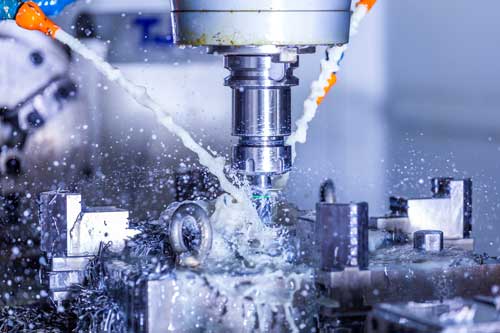
Machining chatter. It’s the bane of machinists everywhere, yet everyone will have to deal with it at some point. It can be very difficult to find the root cause, especially without the right tools, and it often goes unnoticed until chatter marks are visible on finished parts.
In this blog, we’ll do a deep dive into machining chatter and chatter marks, what causes them, how to diagnose the cause, and, most importantly, how to best prevent these issues from recurring.
What are Chatter Marks?
Vibration is inherent in industrial processes — many pieces of equipment used in modern machining spaces generate some level of vibration when in use. The equipment manufacturer typically accounts for these vibrations.
Occasionally, however, machinery begins to vibrate in ways that are not intended and have not been accounted for in the design process. These unwanted vibrations are called machine chatter or machining chatter.
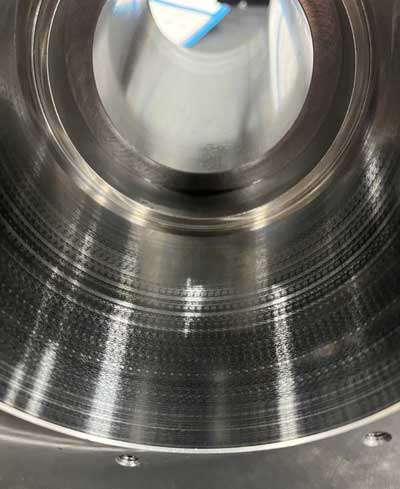
Left unchecked, these vibrations will grow and worsen to the point where they become visible in the completed workpieces. These marks are what we call chatter marks — unwanted cutting patterns that are visible on tooled portions of a workpiece.
Aside from resulting in substandard or even completely out-of-spec parts, unattended machining chatter has a number of negative side effects:
Disproportionate and uneven tool wear
Damage to machines and machine tools
Slower work rates, which increases production cost
Material and energy waste
Types of Machining Chatter & Their Causes
Machining chatter comes in two broad categories: primary and secondary chatter.
Primary chatter includes vibrations that stem from the cutting process itself. They are often, but not always, caused by tools that have worn unevenly. Different types of primary chatter include:
Friction chatter — caused most often by uneven friction between workpiece and tool
Thermo-mechanical chatter — caused by temperature and strain rate variations in the plastic deformation zone of a workpiece material
Mode coupling chatter — caused when one vibration (typically in the thrust force direction) causes a secondary vibration (in the cutting force direction) or vice versa
Secondary chatter primarily includes vibrations that stem from uneven workpiece surfaces. They are known by a few different names — regenerative, resonance, and self-excited chatter — and occur when undulations on the surface of a workpiece cause a vibration in the tool. This vibration then spreads throughout the machine and builds as it goes. In other words, it resonates.
Preventing Chatter and Chatter Marks
Chatter is very difficult to prevent outright. As mentioned, vibrations are innate to the operation of industrial machinery: no tool wears exactly as anticipated, no raw material is completely uniform throughout, no part blank is perfectly proportioned, and so on.
That said, there are some things you can do to minimize the chance that chatter occurs and thereby reduce the rate at which chatter marks appear.
Tooling
There is a right tool for every job, and there are also close-enough tools. It can be tempting, whether for ease or cost, to settle for a close-enough tool for a job, but you’ll be at greater risk of developing chatter and chatter marks. A tool’s substrate, coating, and aspect ratio are just a few considerations. Size and shape are important considerations as well — a longer, thinner tool will vibrate much more readily than a stouter one.
Workholding
The workholding solution you use for a job is also very important, as incorrect position, poor fit, and fixture type will all affect how firmly a workpiece is held and, therefore, how much it vibrates while being machined.
Set Up & Strategy
If a machine is set up correctly — on a flat surface free of imperfections, anchored correctly, and regularly balanced and maintained — you lower your risk of developing chatter and chatter marks. Machining strategy is also important, as workpiece material, RPM, cutting path, degree of cutter engagement, and a host of other workpiece-tool touchpoints can lead to unwanted vibrations.
Vibration Analysis
While the above considerations and strategies can help to reduce the possibility of machining chatter and resultant chatter marks, they cannot completely eliminate it. Despite your best efforts, your machines will encounter unwanted vibrations at times.
That is why the best defense against chatter marks is a good offense — specifically in the form of vibration analysis.
Every machine has a telltale vibration pattern when operating smoothly. In the same way, each type of machining chatter has its own telltale vibration pattern. With a vibration analysis tool like VibePro, you can identify emerging chatter patterns before they worsen to the point of causing chatter marks. Then, rectifying the issue becomes as simple as identifying the type of chatter and alleviating or compensating for the root cause.
Machining chatter remains a headache for manufacturers. While completely eliminating it is rather difficult, savvy manufacturers can fight back by choosing quality tools, optimizing their setup, and using vibration analysis to catch problems before they spiral out of control. This is the key to minimizing chatter marks and other potential part quality issues.
Previously, we wrote a blog about one of the more common topics that we discuss with our clients – the importance of warming up a spindle properly. Today, we’re covering a related and equally important subject — the importance of properly winding down your machine tool spindles when work is done.
When and Why Does a Spindle Need to be Wound Down?
In the same way that we recommend a spindle be warmed up after any period of idleness, we recommend that you wind your spindle down correctly after every period of use. Whether it’s for a period of extended maintenance, a week or holiday, or just change-of-shift, if you’re shutting down you should wind down the spindle properly.
There are multiple reasons why we are enthusiastic about proper wind down procedures. For example, doing so helps improve a spindle’s health. But the primary reason is to avoid damage and contamination by manufacturing process debris. If a spindle is allowed to cool too quickly, while there are contaminants on the external spindle surfaces, you run the risk of that process debris ingress into your spindle by the process of capillary action like solder into a joint.
How to Wind Down Your Spindle
There are hundreds of spindle manufacturers, and many more spindle models, each of which has unique processes and requirements for winding down. For that reason, we recommend that you always follow OEM instructions. However, there are a few general rules for spindle wind down that should apply to just about any model:
Reduce spindle speed gradually – run at 50% power for 5 to 10 minutes, and then at 25% power for 5 to 10 more. This helps to control the cooling process, easing the spindle into it.
During wind down, it’s critical to maintain positive air pressure (air purge) on the machine until the spindle has completely cooled to ambient temperature.
Periodically wipe down spindle surfaces during wind down, using a soft, clean cloth to keep the spindle both clean and dry. This prevents manufacturing process debris from being drawn into the spindle assembly as mentioned earlier.*
Clean any coolant residue from the entire work area, including the spindle.
Ensure that all systems are powered off properly. This includes the coolant system if it’s powered separately.
*Important note: Do not ever use air guns to clean the spindle assembly, especially the face and shaft ID. It may seem like a quicker, lower-touch alternative to using a cloth, but the fact is that you can do serious damage. The pressure of an air gun can easily overpower the positive air pressure (aka air purge) of the spindle, forcing air, contaminated coolant, and machining debris into the critical internal spindle components, such as bearings and others. Using an air gun, you are not blowing debris, chips and coolant off, you are blowing it in.
During and immediately after wind down is also an ideal time to conduct inspections and checks. A few important ones that we recommend performing include:
Inspect and clean toolholders daily, not just during wind down. If tapers have fretting, chip marks or rust, replace them.
Oil level in the lubricator
Condition of the tools
Drawbar retention force using a force gage
Verify that the coolant system is functioning properly
Visual inspection of spindle for any signs of wear, damage, or abnormalities
Listen for any unusual noises
Documentation – record any observations, issues, or maintenance performed.
What Happens if I Don’t Do It?
If you rush through a wind down, you might get lucky and experience no ill effects for a while. But you risk — or, if you skip the process regularly, you practically guarantee — the buildup of swarf on the spindle surfaces and possible ingress into the spindle assembly. This can lead to diminished performance and bearing life, as well as excessive heat, vibration and finished parts that are out of spec or otherwise of reduced quality. Longer term, you’re looking at inevitable spindle failure which can be costly and cause loss of production.
Our conclusion about the importance of spindle wind down is the same as it was for spindle warmup: it takes a few extra minutes to perform the steps properly, but this a small price to pay when compared to the alternative.
In precision manufacturing, machine tool vibration is a critical factor that can significantly impact production quality and equipment longevity. All machinists deal with vibration, or “chatter,” but its complexities often go unnoticed. Let’s look at what it is, its causes, and why it’s crucial to monitor and manage it effectively.
What is It?
Machine tool vibration refers to the oscillatory motion experienced by machine tools, particularly in machining spindles and related equipment. This vibration can occur in various directions and frequencies, potentially affecting the accuracy and quality of the output.
What are the Various Types?
There are three primary types of machine tool vibration as follows:
Free vibrations – sometimes known as random vibrations, these are caused by a shock of some sort — when the tool first contacts the workpiece, when the tool strikes a particularly hard grain in the material, and so on. Free vibrations start at a high frequency and gradually lessen until gone/normalized.
Forced vibrations – which are caused when a time-varying disturbance is applied to a mechanical system. Put more simply, they are caused by forces from either within the machine tool, such as from motors, gears, etc., or from without. Forced vibrations typically exhibit a sudden spike in frequency, followed by a sharp partial drop and then a more gradual lessening until gone/normalized.
Self-excited, or resonance, vibrations – these vibrations occur when a small force — almost exclusively between the tool and chip — cause a small vibration that resonates through the machine and the workpiece, gradually building in frequency until hitting a critical mass. Self-excited vibrations are a common cause of systemic machine failure.
What Causes Machine Tool Vibration?
There are many causes for vibration. A partial list includes:
Improperly balanced rotating components
Misalignment of machine elements
Worn/damaged bearings or other internal spindle components
Uneven friction
Gear teeth meshing
Incompatible materials
Chip cross section variation
Loose components
Insufficient stiffness in tool or workpiece material
Dynamic loads
External vibrations transmitted from the environment
Self-excited vibration caused by trigger forces
Is It Bad?
The quick answer to this question is: yes. At the very least, machine tool vibration can have a negative impact on the quality of your finished parts. If the cutting tool and workpiece are vibrating against each other, cuts will come out rough and uneven or out of tolerance.
Of greater concern and expense, machine tool vibration can cause premature wear to the machine tool itself. Machine tools, and the spindles that drive them, are finely tuned but sensitive equipment. Allowing them to be subjected to vibration over a period of time can and will cause damage, leading to equipment failure and unavoidable repair or replacement.
How Can We Prevent Machine Tool Vibration?
Unfortunately, it is impossible to completely eliminate all unwanted vibration in a real-world environment. However, there are a few ways that you help to lessen them:
Where possible, isolate equipment such as pumps and motors, from your machine tools
Reduce the cutting force of the tool
Change the direction of cutting
When practical, use tools made with higher-stiffness materials
Use higher-stiffness workpiece materials
Ensure your machine tools are properly installed and aligned
Educate operators on signs of vibration and reporting procedures
Monitoring your spindles and related equipment is key. This can be done manually, or by using predictive maintenance. Consider implementing a vibration monitoring solution, such as VibePro, on your spindles. Solutions such as this can detect unusual vibration patterns early. This allows you to catch and correct problems before they grow into bigger, costlier issues.
Understanding and managing machine tool vibration is essential for maintaining high-quality production, extending equipment life, and avoiding unexpected downtime. By implementing regular monitoring and taking other proactive measures, you can keep operations running smoothly and efficiently.
This notice is to inform all VibePro 7 users about the upcoming end-of-life (EOL) for VibePro 7 and the update to VibePro 8. As of July 31st, 2024, active support for VibePro 7 will be discontinued. Starting August 1st, 2024, the only option to use VibePro 7 will be locally on your existing platform, as the ability to upload route data will stop. If You have and Use VibePro 8 you need not do anything but update to VibePro 10. This is the same exact VibePro 8 app that you were used to. It is just more features with a new name. (VibePro 10)
To ensure a seamless transition, we highly recommend migrating to VibePro 10 by July 31st, 2024. Here are the steps to follow:
From VibePro 7:
Migrate Your Plant Hierarchy: Please contact us at in**@********le.com to initiate the migration of your plant hierarchy from VibePro 7 to VibePro 10. We have a software to convert your hierarchy. VibePro 7 data will not come over.
Upgrade to VibePro 10: Download and install VibePro 10 from our website. You will not be required to pay for the upgrade until your current license expires.
Review the VibePro 10 Manual: We have made the VibePro 10 manual available for download. You can access it here. This manual will guide you through the features and functionalities of VibePro 10.
Watch the Transition Video: To help you understand the differences between VibePro 7 and VibePro 10, we have prepared a user video, available below.
From VibePro 8:
Update VibePro 8 to VibePro 10: You simply go to the App Store and manually update VibePro 8. It will reopen as VibePro 10. This will allow you to seamlessly continue your operations without any interruption. Note that you will not be required to pay for the upgrade until your current license expires.
Review the VibePro 10 Manual: The VibePro 10 manual is available for your review to help you get acquainted with the new platform. You can access it here.
We understand that this transition may require some adjustments, but we are here to support you every step of the way. Should you have any questions or need assistance, please do not hesitate to reach out to our support team.
Thank you for your attention to this important matter!
The heart of any good predictive maintenance program is a robust machine monitoring system. The world of monitoring systems is as vast as the equipment types in use today. They differ in form and function based on machinery type, metrics being monitored, industry, and more. Today, we focus on on the machine monitoring systems and software suitable for use in spindle/machine tool applications.
The Importance of Machine Monitoring Systems
A Machine Tool Monitoring System Could Have Prevented this Spindle from Failing
Boiled down to their core, predictive maintenance programs utilizing machine monitoring systems are important for one primary reason — cost savings.
As we’ve discussed in the past, it’s a relatively common practice to run spindles to the point of failure. The problem is that, though there are some small cost savings in the short term, the costs in the longer term can be significantly higher.
Spindle repairs at the point of failure are typically three or more times more expensive than repairs at the first sign of an issue. And the costs don’t stop there: unplanned downtime is quite a bit more expensive than planned maintenance downtime. Monitoring your machine tools helps you identify issues early, when they’re easier and less expensive to fix.
Machine Monitoring Systems Components and Functions
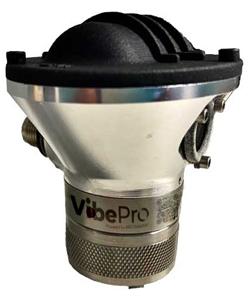
Machine Tool Monitoring Sensor
Though monitoring systems vary in complexity, they’re focused around two primary components: sensors and machine monitoring software.
Sensors are typically some form of accelerometer. Either permanently affixed to a machine tool or portable, sensors measure a variety of metrics, including:
Vibration
Sound/Ultrasound
Temperature/Thermography
And more
The Role of Machine Monitoring Software
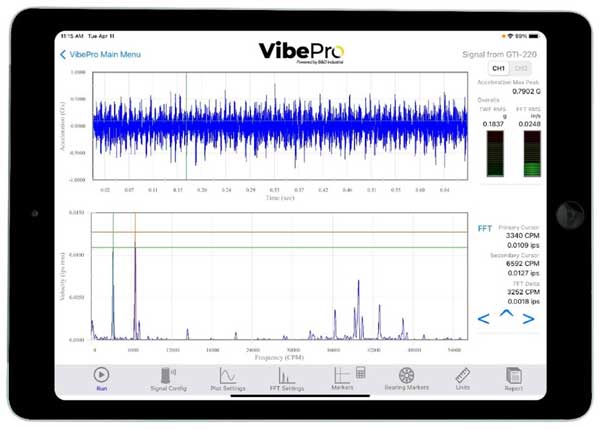
On their own, no matter how powerful or sensitive they are, sensors will not do you very much good. Machine monitoring software is needed to process and generate reports of the collected data. The software is often an app, like the VibePro 10 iPad app.
Machine Tool Software Dashboard
Machine monitoring software takes the raw data from sensors and converts it to a human-understandable form. The software displays the data visually so we can read it, track changes over time, compile both periodic and event reports, sound alarms when key metrics are outside of predefined range, and more.
Machine monitoring systems are powerful tools with many benefits over traditional predictive maintenance methods. They allow for real time machine health data collection, which is presented graphically through robust user-centric dashboards. This critical data allows for improved forecasting accuracy and strategically planned downtime. Their real time alerts and notifications allow operators to resolve issues early, before they grow into much larger headaches. Though machine monitoring systems require some investment upfront, they can pay for themselves quickly thanks to all of the cost-saving advantages they provide.
Want to see if a machine monitoring system can help improve your bottom line?
In the manufacturing sector, there’s been a trend toward having fewer people on the floor at any given time. It started with the advent of automation. Reshoring initiatives hastened it, forcing companies to run leaner operations to remain competitive. Finally, skilled labor shortages, due to several factors, have kicked this trend into overdrive in recent years. Now more than ever, companies must do more, with less.
The Future is Tech
Whether you’re frightened or excited by the idea, the future of manufacturing is technology. Staffing needs and abilities are changing, but the task demands haven’t changed. And for just about every task, technology exists that can augment or complement your existing staff.
The Role of Predictive Maintenance in Machining
Many companies still choose to run spindles and other machine tool equipment into the ground before thinking about implementing a preventative maintenance program. This is more prevalent these days, as staffing challenges and leaner budgets have become the new normal.
Here’s the reality. If your spindles are running unchecked for longer periods of time and you’re concerned about failure, and the associated headaches of downtime and unhappy customers — predictive maintenance technologies can help fill the labor gaps.
Humans have pretty good intuition, especially when it comes to how your equipment is running. Seasoned professionals can often hear or sense things that others can’t. But limits exist. We may know a machine is running hot by touching it, but we probably can’t tell why. It can be difficult to determine the source of the heat, what the precise temperature is, or how that increased temperature is impacting other components. Good news. Temperature and other sensors associated with predictive maintenance technologies, on the other hand, can. Also, as we’ve mentioned in the past, remember that if you hear concerning noises coming from your spindle, it’s often too late. The problem is usually severe, and costly repairs or replacements are unavoidable.
It’s also not economically feasible for most manufacturers to keep highly skilled, experienced, intuitive technicians on the floor 24/7, even when we’re running production 24/7. Predictive maintenance technologies empower companies to monitor spindles remotely, from virtually anywhere in the world. It has the power to give you peace of mind that your machinery is being looked after, and gives your staff the flexibility to do it reliably and remotely.
That’s not to mention:
One-time installation of sensors on difficult-to-reach equipment is far preferable to repeatedly struggling to do human checks.
Well-designed predictive analysis systems will warn you of potential issues long before they become serious ones, or even detectable by human senses.
Certain projections estimate that predictive maintenance can reduce a plant’s maintenance fees by 20% and its unplanned downtime by a whopping 50%.
Are You Ready?
Our natural limitations as humans, the constantly shifting workforce landscape, and the relentless march into the future combine to make the case for the implementation of predictive maintenance technologies plain. Almost by the day, it’s becoming more challenging and costly to keep production facilities staffed like we would 20, 10, or even just 5 years ago.
Navigating the future of manufacturing can be overwhelming, especially with buzzwords like Industry 4.0, IIoT, and cloud-based SaaS frequently mentioned. While these concepts are interrelated, they need not be daunting. You don’t have to dive in all at once. Start with one area that can move your production forward—predictive maintenance is an excellent starting point to ensure machinery operates smoothly.
Even in challenging environments, an efficient factory is a profitable factory.
We talk to a lot of people about spindle predictive analysis. In these conversations, we’ve learned that many companies are reluctant to invest in predictive analysis for their spindles. One comment we often hear is that people prefer to use their own “naked ear” to know when their spindles need maintenance or repair.
While listening is a helpful tool, when it comes to spindle maintenance, it’s more of a “last line of defense” tool than a front-line tool. If you can hear something wrong in your machining equipment, you’re often too late to avoid costly spindle repairs or replacement. Why? Most damage was done long before you could hear it happening.
The crux of what is often misunderstood about predictive analysis for spindles is that, yes, you can avoid the upfront cost of a predictive solution by relying on your own ears and waiting until you hear a problem. But your ears are not nearly sensitive enough to detect the early problems.
You not only miss out on the considerable reductions in repair costs, but also have to suffer through the unplanned downtime that a predictive solution helps you avoid. In practice, spindle predictive analysis tools allow you to hear problems in their earliest phases before they grow into much more complex (and expensive) issues.
The Value of Spindle Predictive Analysis Data
The key to developing a full understanding of spindle predictive analysis is recognizing the value of timely and accurate data. After all, the collection and analysis of data is the primary purpose of predictive analysis solutions.
Predictive analysis utilizes a variety of testing methods to collect informative data. These include vibration analysis, thermography, and ultrasound. Let’s focus on the big one: vibration analysis. Not only are vibrations the most common indication of stress in CNC machining processes, but they also can represent the most damaging threats.
Another word for “vibration” is “frequency. As a healthy, well-balanced spindle turns it creates a specific frequency. Predictive tools monitor this frequency and watch for changes. And just as humans make sounds with our larynxes to share information — or data — with each other, your equipment’s vibrations are sharing data with you. Should a bearing start to wear or the spindle become out of balance, the frequency change is obvious, and corrective actions can be taken.
Unfortunately, no matter how finely tuned your ear is, you’re physically limited in regard to the range of vibration that you can perceive. A spindle vibration detection and analysis system, on the other hand, can perceive subtle changes far sooner than humans can — and alert you to the changes before it’s too late.
What Vibration Analysis Does
A vibration analysis system monitors these frequencies (vibrations) and helps you understand what’s vibrating, how it’s vibrating, and even why — and it can give you important clues to the failures that these vibrations can lead to.
Some of the conditions that vibration monitoring can reveal include:
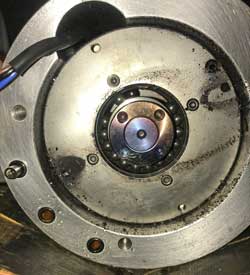
Spindle Bearing health— Bearing failure is a natural phenomenon; vibration monitoring makes tracking bearing lifecycle simple, eliminating surprise failures when done properly.
Imbalance — Often a tooling issue, but could be something else, such as a bad motor brush, for instance.
Misalignment — Shafts that are out of alignment put strain on spindles, resulting in a loss of power transmission as well as damage to, and even failure of, the bearings, couplings, and other associated components.
Looseness — Looseness in your CNC equipment manifests as vibratory sub-harmonic frequencies.
Mechanical wear— Can occur in couplings, bearings, support structures, etc. Other — These include machine drive issues, lubrication issues, and other failing internal components.
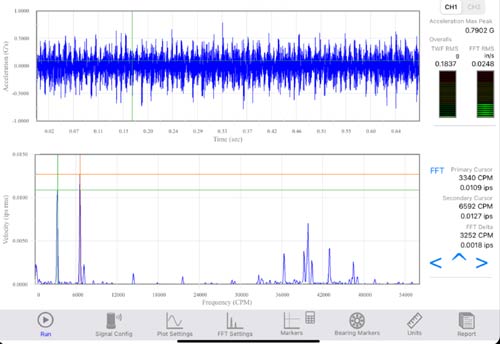
Each of these problems causes different vibrations (frequencies) and, as you use and learn a vibration monitoring system, you’ll learn to spot the signs of each. Over time, the goal is to correlate what you see in the data with what’s specifically happening within the machine.
Understanding the Data
It can seem intimidating to suddenly have access to all this data, especially before you’ve gotten a handle on how to interpret it. If you implement a high-quality spindle predictive analysis system, however, the software will help with the interpretation.
Even if you use a system like this at its most basic level — one measurement taken and recorded periodically — you’re going to see a benefit. After all, as they say, three pieces of data shows a trend, and, “a trend is your friend”. It gives you something to evaluate and compare over time.
The point is that if you are serious about reducing spindle repair and maintenance costs, and about minimizing unplanned downtime, doing the old ear check isn’t going to cut it. You need a robust set of current and accurate data — and spindle predictive analysis is the best way to get it.
One of the universal truths of business is that not every supplier provides the same commitment to quality and process as others. Some take shortcuts to get through jobs quicker, building their business on throughput. Others, like us at GTI, prefer to do jobs right, from bottom to top, building a business on results and reputation. When it comes to getting your spindles repaired or rebuilt, it’s critical to work with a supplier that provides quality, thorough work.
It’s no secret. Spindles are a cornerstone in manufacturing, with CNC machine tools performing so many functions — boring, drilling, routing, grinding, milling, sawing, cutting, and more. Without a properly functioning spindle, work comes to a halt, leading to a loss of productivity and income. To avoid unplanned downtime, a proficient facility manager will have a preventative maintenance strategy in place. However, a subpar spindle repair job, prone to sudden failures, can disrupt even the most carefully crafted schedules.
Of course, minimizing unplanned downtime isn’t the only benefit of properly rebuilt spindles. The quality of a rebuild also has an impact on the quality of the work you’re producing. Even the slightest imperfections or balance issues, easily missed if the rebuilder isn’t paying careful attention, can directly and negatively impact the precision and quality of your machined components.
A High-Quality Spindle Rebuild
Every spindle repair company and technician will have their own “trade secrets” — we certainly do — but there are a number of steps that are an absolute must for a high-quality spindle rebuild:
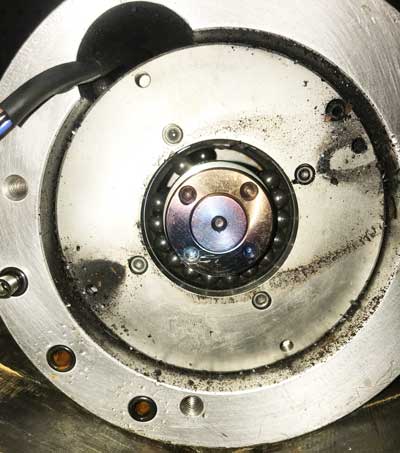
Evidence of Improper Lubrication
Cleaning — During disassembly, every surface of every part of a spindle should be carefully cleaned in preparation for inspection.
Inspection — It’s important to identify the primary cause of failure. It takes care and experience to properly conduct a thorough and detailed inspection to shine light on the contributing issues. At GTI, we hand-inspect every single component of every single spindle that comes through our doors.
Measurements and documentation — During inspection, all parts of a spindle, its shaft, and its housing should be measured and documented.
Failure analysis — Every rebuilt spindle should come with a detailed report on what caused the failure. Having this valuable and often actionable information could help prevent future failures, when responded to properly.
Only after these steps are taken should a spindle repair technician then begin the process of repairing and replacing parts.
After the rebuild itself is complete, there are further steps that a shop should take before they return the spindle to its owner:
Testing — A range of tests should be conducted to ensure that the reassembly process was conducted correctly.
Balance adjustments — Spindles are super-precise instruments that need to be balanced on multiple axes to ensure proper operation. At GTI, we dial spindle balance measurements to higher-than-OEM specifications.
What to Look for in a Spindle Rebuilder
Simply put, not every spindle repair job is equal because not every spindle repair shop is equal. But how do you know if the one you’re considering is the right one? Here are a few things that all top-tier spindle repair shops share:
A good shop will have experience, over a long period of time, with a wide range of different OEM brands. Keep in mind, there are spindles from over 350 manufacturers out there!
They will guarantee their repairs and rebuilds meet or exceed original OEM specifications.
They conduct extensive testing and balance adjustments to do so.
And finally, a top-tier shop will offer a top-tier warranty. For instance, all GTI-rebuilt spindles come with a full one-year warranty that kicks in when it’s put back into service, as opposed to when it’s shipped, no matter how far in the future that is.
When it comes to rebuilding your spindle, precision matters. Cutting corners and saving a few dollars will most likely cost you in the long run. Don’t take chances. Choose an experienced shop that has a quality-driven process in place, to ensure a proper and reliable spindle rebuild that will last.


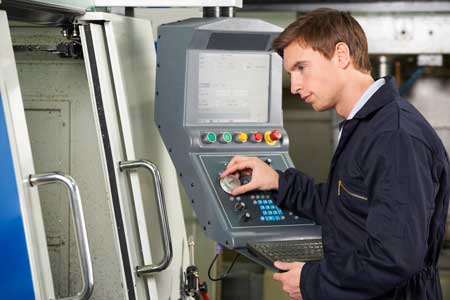
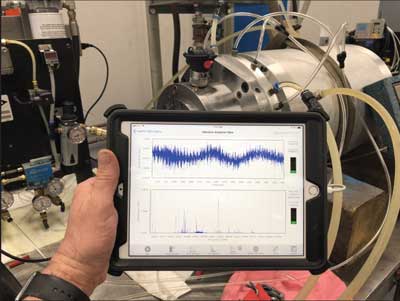 Humans have pretty good intuition, especially when it comes to how your equipment is running. Seasoned professionals can often hear or sense things that others can’t. But limits exist. We may know a machine is running hot by touching it, but we probably can’t tell why. It can be difficult to determine the source of the heat, what the precise temperature is, or how that increased temperature is impacting other components. Good news. Temperature and other sensors associated with predictive maintenance technologies, on the other hand, can. Also, as we’ve mentioned in the past, remember that if you hear concerning noises coming from your spindle, it’s often too late. The problem is usually severe, and costly repairs or replacements are unavoidable.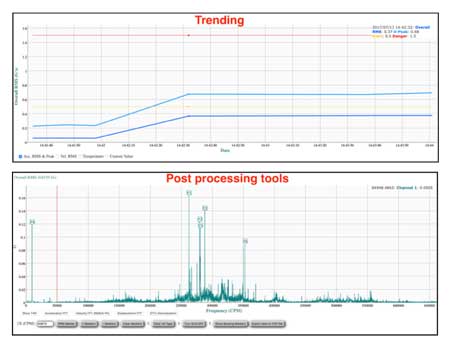
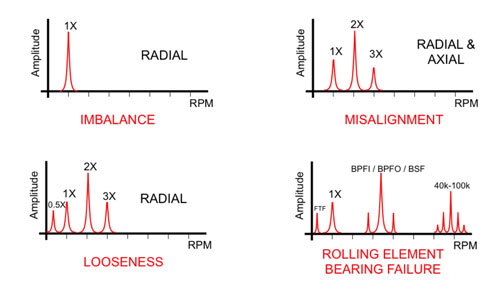 Each of these problems causes different vibrations (frequencies) and, as you use and learn a vibration monitoring system, you’ll learn to spot the signs of each. Over time, the goal is to correlate what you see in the data with what’s specifically happening within the machine.