Author: Echelon

  • Air Quality: The Overlooked Spindle Maintenance Variable

    Most conversations about spindle maintenance and repair revolve around lubrication.

    On its face, this makes sense: bearings are one of the most important parts of any CNC spindle, and bearings require lubrication to function properly. Failure to properly lubricate bearings will lead to equipment failure and all that that entails — repair costs, manufacturing downtime, and so on.

    In spindle repair circles, however, there’s something that we refer to as the silent killer of spindles, and it isn’t improper lubrication. We’ll give you a hint: drier is better.

    Proper Air Supply for Spindles
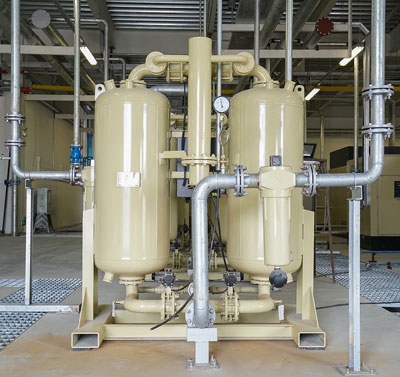
    Air CompressorThat’s right, air supply is a CNC spindle’s secret menace — or, rather, a contaminated air supply.

    What we have found is that, because so much emphasis is put on bearing health, other aspects of spindle health are talked about less often. This leads to those other issues becoming more prominent.

    This inverse relationship means that poor air quality, be it particulate contamination or elevated moisture content, is the leading cause of unexpected, premature spindle failure. In fact, air supply contamination actually accounts for about 80% of all spindle failures.

    Some of these air-related failures are caused by external contaminants, such as grinding swarf of coolant particles, but a larger number of them can be traced directly back to the spindle operator.

    A Case Study

    A Pennsylvania-based automotive parts manufacturer, running Bryant High Speed ID grinding spindles in 24/7 production, was experiencing a high failure rate — about 40 in 2016. They brought us on to diagnose the failures and lower their rates.

    We worked closely with them to track and trend their spindle failures, not just by spindle serial number but also by the machine tool serial number that the spindle was deployed in. What we found was that out of all their failures, 80% of them — exactly the industry average — were caused by a contaminated air supply. In particular, their air was too moist.

    We recommended that they install an air drier, specifically a three-cell drier that has 1/3 more capacity than their system requires: this way, a cell can be out of service for repair or cleaning at any time without impacting the drier’s performance.

    The manufacturer made our suggested air supply system updates and saw their failure rate plummet by 50%.

  • 3 Questions to Ask About Your Next Spindle Repair Warranty

    Spindle-Repair-WarrantyWhether you’re running a CNC mill, grinder, or lathe your machine’s spindle is a critical component, and daily operations subject it to tremendous pressures. These pressures all but ensure that your spindle will, at some point in its lifespan, require repair.

    For these reasons, we consider the warranty offered on a repaired spindle to be a key purchase factor. If you aren’t careful, you could often wind up in an unfavorable position, possibly spending way more money than you should over the long run.

    So, what makes a spindle repair warranty stand out from the rest? Here are our thoughts:

    How Long Does the Warranty Last?
    This one is pretty cut and dry. The longer the warranty period, the better. Many companies will warranty their work for 6 months, some as long as 12 months – twice the coverage!

    When Does Warranty Period Start?
    More important than how long a warranty lasts, is when the warranty actually begins.

    For many spindle OEMs and third party repair companies, the warranty becomes effective the moment the spindle leaves their shop. If you’re lucky, perhaps the warranty won’t kick in until delivery at your facility is confirmed. But the fact is, there’s a high likelihood that your newly repaired spindle is going to sit around at your shop for a while before it gets reinstalled. Unfortunately, you’ll often find that your warranty has expired long before you have even used it.

    The gold standard for a warranty’s effective date is when the spindle is actually back in service. This way, the warranty is active during the spindle’s active lifespan, not while it sits on a shelf.

    Who’s Allowed to Install the Spindle?
    Another key factor to watch out for – installation clauses. Often, OEMs will include language specifying that installation by anyone but their own technicians automatically voids the warranty. This could lead to increased, and often unnecessary costs for customers — up to several thousand dollars. It can also add delays while waiting on technician availability.

    A fair and flexible spindle repair warranty shouldn’t have such limitations, instead allowing the client to choose their own installer, often a company employee, and timeframe.

    While repairing your spindle is often a better option than replacing it, you’ll need to smart about the warranty. Ask the questions we’ve outlined for you. Make sure you have a warranty that’s designed to work with you, and not cost you more down the road.

    We don’t care much for back-patting at GTI, but we are proud to offer one of the spindle repair industry’s most customer-centric warranties. The warranty features listed above — fair timeframes, logical effective dates, and full installation freedom — are the foundations of our standard spindle repair warranty.

  • GTI & Peron Spindle, When a Repair Just Isn’t an Option.

    Spindle repair and rebuild is the heart of what we do at GTI Spindle Technology, and we pride ourselves on being able to handle any spindle that comes through our door. All spindles can be repaired, though the associated cost for some can eclipse that of a brand-new spindle. When this happens, we turn to Peron Spindle for a replacement.

    GTI is the exclusive North American reseller for Peron Spindle and we have been working together since 2013. GTI sought a relationship with Peron because of their diverse product line and complete spindle knowledge as well as their high standard of quality craftsmanship.

    Peron spindles feature heavily in the aerospace, automotive and OEM sectors where GTI specializes. Peron is known for their high frequency ID grinding spindles utilized in this sector and this type of spindle plays a critical production role for many of GTI’s customers. By providing Peron replacement spindles GTI gets customers back up and running with minimal downtime.

    Should customers have an obsolete spindle and replacements are no longer manufactured, GTI and Peron have you covered. Using your existing spindle, Peron will reverse engineer a completely new spindle saving customers time and money having to retrofit or replace machinery. Peron also does not require a set production run to manufacture spindles enabling them to fabricate one-off spindles.

    The relationship between GTI and Peron Spindle has saved our customers thousands. Here is one such example. As with any customer, GTI has to understand their situation: their needs versus their wants, their problems and most of all have them trust in our ability to address these issues. We have a spindle design tech that has worked with one such company for over 30 years.

    This company has 30 plus machines with GTI repaired spindles. Each machine has a grind spindle and a dresser spindle; Peron has built duplicate replacements for both types of spindles. In order to maintain production, they have always maintained a supply of spare spindles. Spindle life is far from a finite number and it can vary from a few weeks to as much as 2 years. A spindle can always be repaired, it is just a matter of making this cost effective. Some companies will purchase new spindles when the repair cost is more than 50% of a new replacement, while others will allow repair spindles cost to go as high as 75% before replacing.

    As repair cost for these spindles increased due to age and other factors, GTI took the initiative to discuss replacing some of the higher cost repairs with new spindles. GTI’s knowledge of the spindles comes from the many repairs we have done and our engineering expertise allowed GTI to approach Peron with spindle specifications for a design that would require no changes to the machines. In going to Peron with specifications that would make the new spindle a direct replacement and getting a quote for replacing those high cost repairs, GTI was in a position to present a clear cost effective proposal.

    In this case, GTI did an analysis of some of the high cost spindle repairs to determine which spindles should be replaced. Not only were the most recent cost reviewed, but several years of spindle repair history was taken into consideration. Spindles that had a long history of expensive repairs were candidates for replacement as opposed to a spindle that had only a recent one time high cost repair.

    Based on the cost of a new replacement spindle, a dollar figure was assigned that made a spindle repair questionable. GTI provided a list of spindles that fit this criterion and suggested a quantity of spindles to be replaced as well as a cost justification for the replacement. The three main factors to be considered for replacement were a direct replacement spindle, cost of repairs versus new spindles and lost production. Therefore, the cost justification was based on new spindle cost, old spindle repair cost and lost production due to spare spindles not being available. 

    A total of four new spindles were purchased and are now in use, manufacturing product alongside the original spindles. Additional new spindles are to be considered as the older spindles become too expensive to repair; some of these spindles are over 25 years old.

    Machines are comprised of a whole host of pieces, of which a spindle is the most crucial component. GTI’s relationship with Peron allows us to provide outstanding customer service and supply high quality spindles when repair is not an option.